
Science and technology in China has in recent decades developed rapidly. The Chinese government has placed emphasis through funding, reform, and societal status on science and technology as a fundamental part of the socio-economic development of the country as well as for national prestige. China has made rapid advances in areas such as education, infrastructure, high-tech manufacturing, academic publishing, patents, and commercial applications and is now in some areas and by some measures a world leader. China is now increasingly targeting indigenous innovation and aims to reform remaining weaknesses.

China’s state-owned China Mobile is world’s biggest mobile phone operator, with 70% share of the domestic market.
[ The Guardian UK, January 11, 2010 ]
Mobile phone subscribers are now required to show identification when setting up a new account, including foreigners and visitors.
[ CNET News "China requires cell phone subscriber IDs" Sept. 1, 2010 ]

China now has the world’s fastest supercomputer, after taking the title from the U.S. in 2010. China’s Tianhe-1A is “a computing monster” with 262 terabytes of memory and is housed in 140 refrigerator-sized cabinets.
[ Wired Mag “China Beats U.S. For the World’s Fastest Supercomputer Title” Oct. 28, 2010 ]

China is the world’s leading electronics exporter. According to data from China’ s Ministry of Commerce, China exported US$933.4 billion worth of mechanical and electrical products in 2010.
[Ministry of Commerce; China Daily “China's electronics exports top the world in 2010” Feb 24, 2011 ]
China will be the world’s largest computer market by 2013, according to the CEO of Acer, the world’s second-largest computer maker behind Hewlett-Packard.
[ Bloomberg News “Acer Says China to Be World’s Largest Computer Market” Nov. 30, 2010 ]

Only about 20% of China’s population owns a PC. However, many tens of millions more are able to access the Internet at Internet cafés, in workplaces, or through PCs that are shared by a household.
[ BCG report “China’s Digital Generations 2.0” May 2010 ]
China facts: MOBILE PHONE PENETRATION RATE
China has the world’s largest mobile phone population (over 850 million active accounts in 2011).
[ Wikipedia “List of countries by number of mobile phones in use” ]

China’s mobile phone penetration rate is only about 53%–considerably lower than the global average of 67% in 2009.
[Euromonitor 2010 report “Regional Focus: Asia Pacific - the world's largest mobile phone market” ]
[ Wikipedia “List of countries by number of mobile phones in use” ]
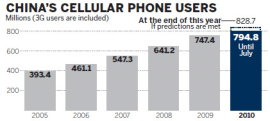
China’s mobile phone penetration rate is only about 53%–considerably lower than the global average of 67% in 2009.
[Euromonitor 2010 report “Regional Focus: Asia Pacific - the world's largest mobile phone market” ]
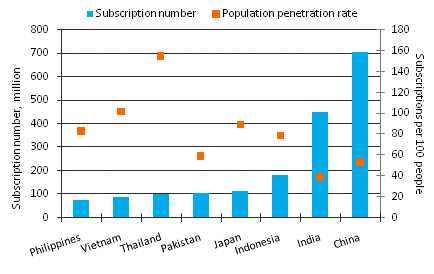
Asia: mobile phone users & penetration rate
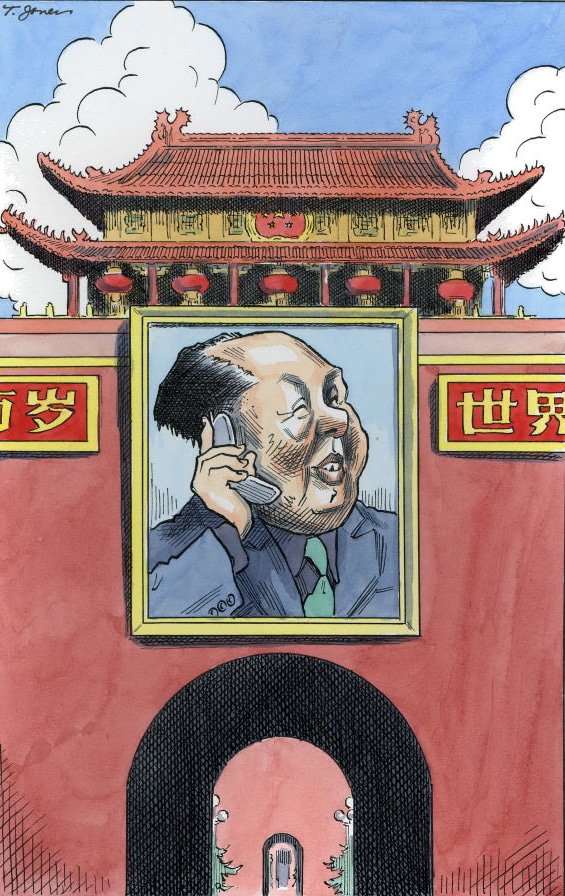
China’s state-owned China Mobile is world’s biggest mobile phone operator, with 70% share of the domestic market.
[ The Guardian UK, January 11, 2010 ]
Mobile phone subscribers are now required to show identification when setting up a new account, including foreigners and visitors.
[ CNET News "China requires cell phone subscriber IDs" Sept. 1, 2010 ]
China facts: COMPUTERS & ELECTRONICS
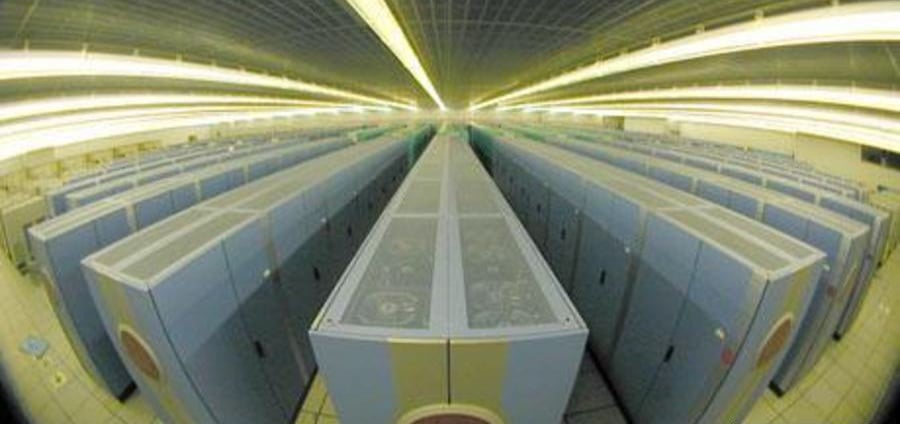
China now has the world’s fastest supercomputer, after taking the title from the U.S. in 2010. China’s Tianhe-1A is “a computing monster” with 262 terabytes of memory and is housed in 140 refrigerator-sized cabinets.
[ Wired Mag “China Beats U.S. For the World’s Fastest Supercomputer Title” Oct. 28, 2010 ]
China is the world’s leading electronics exporter. According to data from China’ s Ministry of Commerce, China exported US$933.4 billion worth of mechanical and electrical products in 2010.
[Ministry of Commerce; China Daily “China's electronics exports top the world in 2010” Feb 24, 2011 ]
China will be the world’s largest computer market by 2013, according to the CEO of Acer, the world’s second-largest computer maker behind Hewlett-Packard.
[ Bloomberg News “Acer Says China to Be World’s Largest Computer Market” Nov. 30, 2010 ]
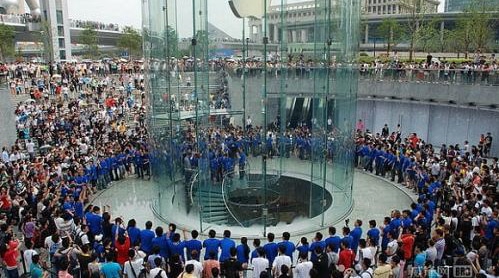
Apple retail store in Shanghai.
Only about 20% of China’s population owns a PC. However, many tens of millions more are able to access the Internet at Internet cafés, in workplaces, or through PCs that are shared by a household.
[ BCG report “China’s Digital Generations 2.0” May 2010 ]


No comments:
Post a Comment